

Palermo, the capital of Sicily, is a city built on layers of history—a city of crossroads where Arab, Norman, and Italian cultures intersect. And nowhere does this rich, chaotic, and vibrant past come alive more spiritedly than through its historic street markets.
This guide will walk you through the most famous markets in Palermo, Sicily, detailing what makes each one unique and the delicacies you must try, along with our essential tips to make the most of your visit.
If you’re traveling through Italy, a visit to a vibrant street market, such as the famous ones in Palermo, or even lesser-known ones like the daily market in Ventimiglia on the French border, offers a genuine glimpse into local life.
Why Palermo’s Markets Are Famous and Unique?
The markets in Palermo are distinctly different from those in the rest of Italy. While you can find excellent produce and atmosphere at the market in Ventimiglia or Florence, the Sicilian market experience carries a deep historical flavor. They were not just commercial areas; they were strategic centers built on ancient trading routes.
A qualitative research study on urban markets in Palermo found that visitors experience these spaces not just as food centers but as authentic cultural and social theaters.
Arab Heritage
The structure and atmosphere, with winding, covered streets, the theatrical cries of vendors (abbanniati), and a wide array of spices and textiles, directly reflect the Arab period, spanning from the 9th to the 11th centuries. They are far more reminiscent of North African bazaars than typical European Sicilian markets.
According to a research paper on the historic evolution of Sicilian urban markets, Palermo’s marketplace culture carries direct influence from Arab trading systems dating back more than 1,000 years.
Street Food Culture
These are markets that constitute the very heart of food street market culture. Food is often cooked and consumed on-site, making the shopping excursion a culinary event.
Cultural Immersion
Tourists experience a raw, unpolished, and intensely local side of Palermo life that is often hidden in the grand squares.
Top Markets in Palermo Sicily and Beyond
Palermo is famously home to four historic markets, but three stand out as the most vibrant and essential for any visitor to experience. They are characterized by the loud, rhythmic cries of the vendors (abbanniati), the intoxicating mix of aromas, and the overflowing stalls.
But what makes the Sicilian markets so special? Unlike some other Italian cities, where markets are primarily for produce, the Sicilian markets—particularly those in Palermo—are cultural theaters.
They draw apparent historical influence from North African and Middle Eastern bazaars. This feature distinguishes them from markets elsewhere on the peninsula, such as the indoor Testaccio Market in Rome.
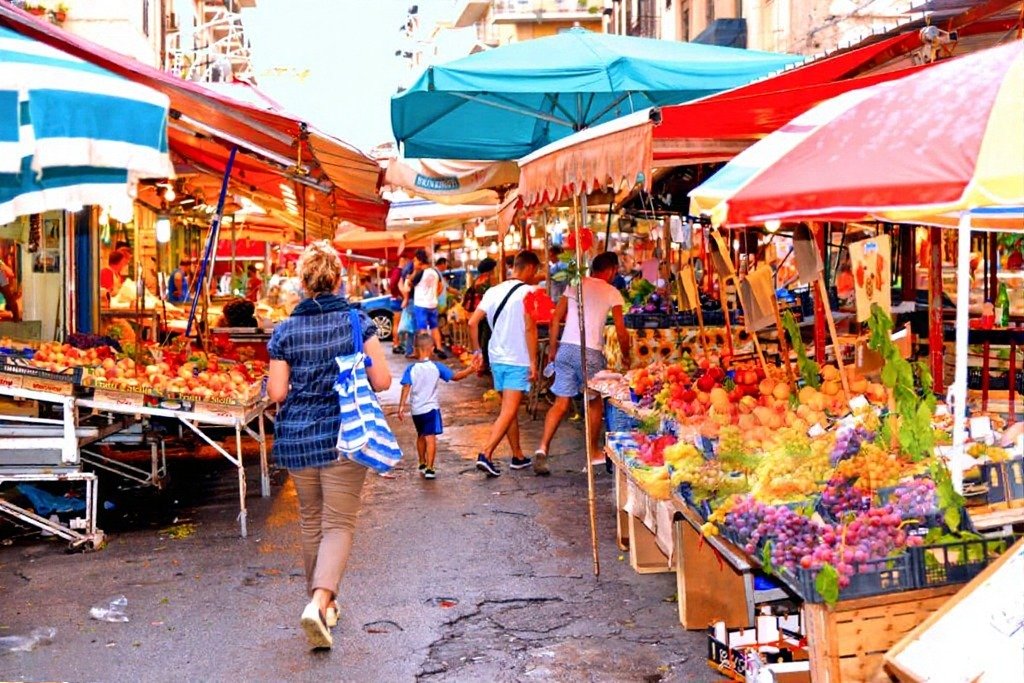
Below are the must-visit markets in Palermo, each with its own unique personality.
1. Ballarò Market: The Largest and Most Authentic
- Vibe: Ancient, vast, chaotic, and incredibly authentic. It feels the most like a traditional North African bazaar. The Ballarò street market in Palermo is often considered the most visceral experience.
- Location: Spreads through the Albergheria district, near the Church of Casa Professa and the central train station.
- What to Find: The most extensive variety of fresh produce, meat, and fish. It’s renowned for its fantastic value and its deep connection to local life. Here, you’ll find everything from kitchen necessities to vintage clothes, making it the most comprehensive Palermo street market.
What to Eat at Ballarò Market?
The Ballarò street food market in Palermo is famous for:
- Arancine: Crispy, fried rice balls, typically stuffed with ragù (meat sauce) or butter and mozzarella.
- Pane e Panelle: Chickpea fritters served in a soft bun—a true Palermitan staple. This is the heart of Palermo’s street food market culture.
- Tip for Visitors: This is the best place for an authentic glimpse into local shopping. It is also a bustling area, so remain vigilant of your belongings. While the area can seem run down in spots, this is part of its authentic charm, representing the less gentrified, true spirit of Palermo.
2. Capo Market (Mercato del Capo): The Foodie’s Souk
- Vibe: Labyrinthine, theatrical, and rich in Arab influence, often feeling like a genuine souk. The narrow alleys give the Capo street market in Palermo a mysterious atmosphere.
- Location: Extends from Porta Carini, just behind the magnificent Teatro Massimo.
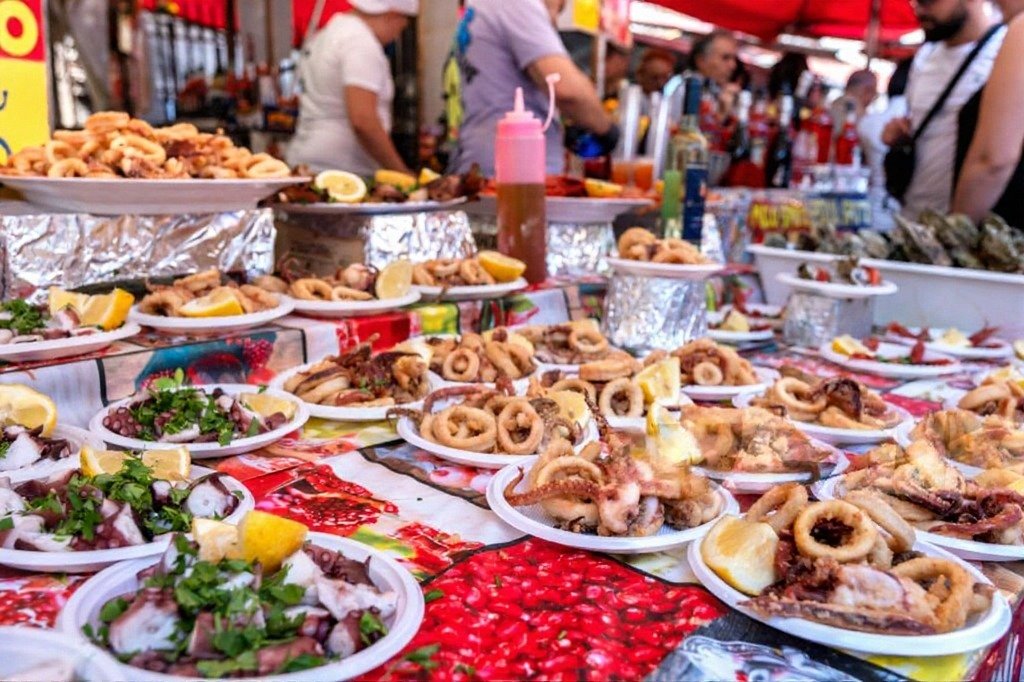
- What to Find: Highly celebrated for its fresh seafood and vibrant displays of produce, spices, and cheeses. Look for the stalls selling beautiful Sicilian-themed ceramics and textiles along the edges.
What Food is Palermo Famous For?
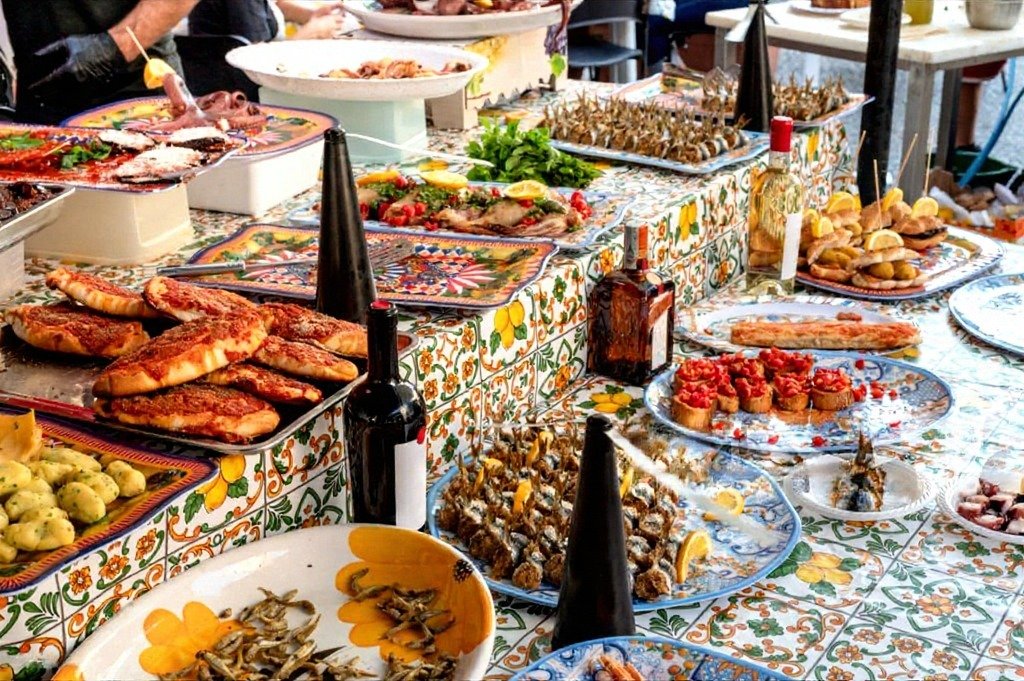
At Capo Market Palermo, you must try the grilled seafood and:
- Sfincione: Palermo’s thick, spongy, focaccia-style pizza, typically topped with tomato, onion, and anchovies. It’s a key part of the Palermo food market scene.
- Fresh Seafood: Often grilled right on the spot (like grilled octopus or sardines), showcasing the bounty of the Mediterranean.
- Tip for Visitors: Enter through the ancient Porta Carini for a grand entrance. Visit in the morning to see the fishmongers at their most energetic.
3. Vucciria Market: The Nightlife Transformation
- Vibe: Once Palermo’s primary meat and fish market, it is smaller and quieter by day, but transforms into a massive, lively nightlife hub after sunset.
- Location: Centered around Piazza Caracciolo, near the Cala (marina).
- What to Find (Day): A few stalls selling vegetables, spices, bric-a-brac, and tourist souvenirs. You may also find an odd, small Asian market vendor in Palermo, catering to a diverse local crowd.
- What to Find (Night): Open-air grills, makeshift bars, cheap drinks, and a party atmosphere with music and street dining that lasts late into the night.
4. Borgo Vecchio – Palermo’s Night Market
- Vibe: While many Palermo street markets are morning experiences, Borgo Vecchio thrives after dark. It’s lively, social, and packed with a mix of locals, workers, students, and late-night food lovers.
- Location: Situated between Via Cavour and the port area, not far from the city center.
- What to Find: Borgo Vecchio stands out for late-night street food stalls, budget-friendly snacks and drinks, informal open-air eateries, vendors selling basic clothing, household items, and accessories.
- What to Eat: While not as gourmet-focused as Capo or Ballarò, Borgo Vecchio offers beloved classics such as grilled seafood, sandwiches, local fried snacks, Sicilian desserts.
Beyond Palermo: Other Key Markets in Sicily
While Palermo boasts the most famous and historical markets, other cities in Sicily also have essential markets that showcase regional specialties. For a comprehensive Italian Rome itinerary, consider how the diverse regional street markets compare, from Sicily up to the northern border towns.
Catania Market Sicily
The Pescheria (Fish Market) in Catania is legendary. The Catania fish market in Sicily, Italy, is an absolute must-see, renowned for its vibrant and dynamic atmosphere, as well as its vast array of fresh seafood.
Syracuse Market Sicily
The daily market near Ortigia is fantastic. The Syracuse Sicily market (known as the Mercato di Ortigia) is an incredible experience, celebrated for its high-quality produce, cheeses, and the famous Caseificio Borderi sandwich stand.
Note on other markets: You may see local chains mentioned, such as Famila Market in Palermo or Penny Market. These are modern supermarkets, not the historic street markets that offer an authentic cultural experience. Palermo also hosts a flea market near the Cathedral, which is great for unique finds and souvenirs.
The Sicilian Street Food of the Markets
The markets in Palermo, Sicily, are the birthplace of the city’s legendary street food scene. Don’t leave without tasting these unique local specialties.
| Delicacy | Description | Where to Find It |
| Arancine | Deep-fried rice balls, usually filled with ragù (meat sauce) or ham and mozzarella. | Ballarò Market Palermo, Capo |
| Panelle | Savory fritters made from chickpea flour are often served in a sesame seed bun. | Food Market Palermo vendors |
| Sfincione | Thick, spongy street pizza with a rich tomato, onion, and caciocavallo topping. | Capo Market Palermo, and street vendors |
| Stigghiola | Skewered and grilled lamb or goat intestines, typically wrapped around a spring onion. | Vucciria Market, Palermo (especially at night) |
Are Palermo Markets Expensive?
Absolutely not. They are one of the most budget-friendly ways to eat in Italy.
Food Costs: Street food items, such as Arancini or Panelle, typically cost €1.50–€3.50 each. A complete street food lunch will rarely cost more than €10.
Negotiation: While haggling isn’t typical for a single purchase of a piece of fruit, it is often expected for souvenirs or when buying a large quantity of goods. Don’t be afraid to gently ask, “È l’ultimo prezzo?” (“Is that the final price?”).
Cash Only: A key piece of advice for visiting any Sicilian market is to bring some money. Most small stalls and street food vendors do not accept credit cards.
Essential Tips for Visiting Markets in Palermo
To get the most out of your experience at the best markets in Palermo, Sicily, follow these practical tips:
- Go Early: Visit in the morning (around 9:00 AM) for the best produce selection and to see the markets at their bustling peak before the intense heat of the day. Do markets close at 4 or 5? Most primary food market activity winds down by 2 PM, though Vucciria picks up again later.
- Bring Cash: Many street food vendors and small stalls operate on a cash-only basis. Have small bills (€5 and €10) ready for quick transactions.
- Shopping vs. Souvenirs: Is Palermo a Good Shopping Destination? Absolutely! You can find fantastic local spices, ceramics (a great souvenir from Sicily), and even vintage clothes, but remember that the primary goods are food and fresh produce.
- Stay Safe: As with any large, crowded market area, be mindful of your valuables and consider leaving expensive items at your accommodation. The focus on perceived safety or “dark side” of Palermo is often overblown in tourist guides.
Conclusion
A visit to the markets in Palermo, Sicily, is more than just a shopping trip. It is an immersion into the living, breathing history of the island. From the colorful spectacle of the Capo fishmongers to the authentic roar of Ballarò, these ancient streets offer the most profound connection to the island’s culture, history, and unparalleled cuisine. Allow yourself to get lost in the noise, the smells, and the flavors—it is the best way to uncover the true secrets of the city.
Additionally, if you’re planning a romantic trip or an Italian honeymoon, exploring Sicily’s historic markets offers an authentic experience that goes far beyond typical tourist spots.
Frequently Asked Questions
What days are the markets in Palermo?
The major markets in Palermo (Ballarò and Capo) are generally open from Monday to Saturday and often on Sunday mornings, though hours vary. The most vibrant time is usually mid-morning. Vucciria is active during the day but really comes alive in the evening for nightlife.
Which market is best for street food?
While you can find street food at all of them, Ballarò and Capo are generally considered the best for a wide variety of fresh food and traditional daytime street snacks. Vucciria is the destination for a night-time street food and bar experience.
Is it okay to wear shorts in Sicily?
Yes, especially during the hot summer months. However, if you plan to visit churches (many of which are adjacent to the markets), it is respectful to cover your shoulders and knees.
What is the famous street in Palermo?
While many famous streets exist, Via Maqueda and Corso Vittorio Emanuele (the historic Càssaro) intersect to form the Quattro Canti, which is near the Capo Market. The markets themselves are the truly famous, landmark paths of the city.
What are the three main markets in Palermo?
Ballarò, Vucciria, and Capo Market are Palermo’s three most historic markets, each offering a unique atmosphere, vibrant street food, fresh produce, local crafts, and a deep cultural connection to the city’s past.
Is Palermo good for shopping?
Yes. Palermo is excellent for shopping, offering everything from traditional Sicilian food markets and family-run artisan shops to antique stalls, souvenir stands, and modern boutiques across the city’s bustling neighborhoods.
Do markets close at 4 or 5 PM?
Most traditional Palermo markets begin closing by mid-afternoon as vendors pack up their stalls. Still, lively night markets, such as Borgo Vecchio, continue operating well into the evening, especially on weekends and during the summer.
What food is Palermo famous for?
Palermo is renowned for its iconic Sicilian street foods, such as arancini, panelle, sfincione, and cannoli, as well as incredibly fresh seafood, reflecting centuries of Arab, Norman, and Italian culinary influences.
What to do in Palermo in 1 day?
In one day, explore Ballarò Market in the morning, visit Palermo Cathedral and Quattro Canti, stroll through Capo Market, and finish your evening enjoying nightlife and food in Vucciria.
Reference:
https://www.witpress.com/Secure/elibrary/papers/CC19/CC19018FU1.pdf
https://link.springer.com/book/10.1007/978-3-030-55736-2
https://www.academia.edu/130027786/Role_and_importance_of_historic_urban_markets_in_Sicily