
If there’s one square in Rome that captures the city’s dual personality, it’s Campo de Fiori Rome.
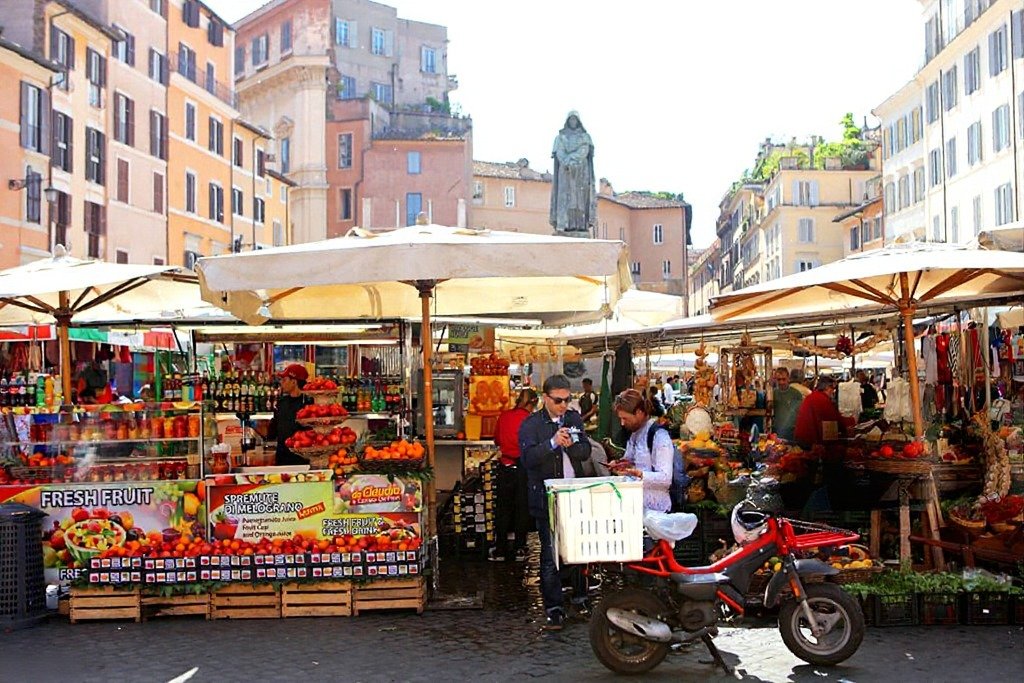
By day, it’s a colorful open-air market filled with stalls selling fresh fruit, vegetables, spices, flowers, and souvenirs. By night, the same piazza transforms into a lively social hub, with bars, trattorias, and wine spots spilling over with energy.
I still remember my first visit—biting into a hot slice of pizza al taglio from the famous Forno Campo de’ Fiori. At the same time, I watched vendors stack pyramids of citrus beneath striped umbrellas. Hours later, the same square pulsed with nightlife energy. That’s the magic of Rome Campo de Fiori.
Why Visit Campo de’ Fiori?
🕰️ Historic morning market & buzzing nightlife
🍷 Great mix of food, wine bars, and trattorias
📍 Central Rome location near Pantheon & Piazza Navona
📸 Perfect for people-watching & photos
In this guide, I’ll walk you through the history behind its name, how to get there, market hours, food, and tips to make the most of your visit in Rome, Italy.
What is Campo de’ Fiori?
At its simplest, Campo de’ Fiori is one of the most famous squares in Rome. Unlike the grand Piazza Navona or the monumental Piazza Venezia, Campo de’ Fiori feels raw, authentic, and alive.
Here’s what sets it apart:
- Morning Market: From Monday to Saturday, stalls fill the piazza with food, spices, flowers, and souvenirs.
- Evening Hotspot: As the sun sets, Campo de’ Fiori transforms into a bustling nightlife hub with bars, cafes, and trattorias.
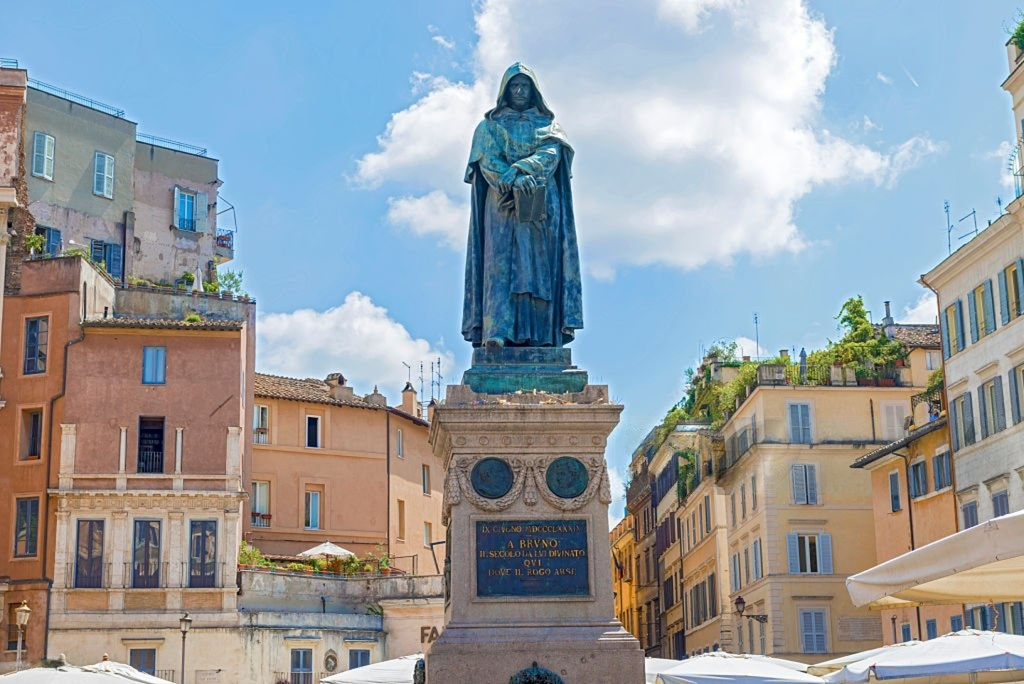
- Cultural Symbol: With its dramatic history and the looming statue of Giordano Bruno, it represents both tradition and rebellion.
And while many piazzas in Rome are more about the architecture or the monuments, Campo de’ Fiori in Rome is about people—a meeting point where locals, students, and travelers come together.
What is the History of Campo de Fiori in Rome?
What does Campo de’ Fiori mean in Italian? Quite literally, it translates to “Field of Flowers.” The name recalls the Middle Ages, when this part of Rome was not yet a bustling piazza but an open meadow covered in wildflowers.
While the name sounds poetic and charming, the history of Campo de’ Fiori is anything but simple.
Over the centuries, this square has transformed from a quiet field into a vibrant marketplace—and at times, a stage for some of the city’s darkest moments.
Quick Facts Table
| Info | Details |
| Location | Piazza Campo de’ Fiori, Rome |
| Market Hours | Mon–Sat, ~7:00 am – 2:00 pm (best before 12 pm) |
| Famous Landmark | Statue of Giordano Bruno (center of square) |
| Nearest Stops | Tram 8 (Arenula/Cairoli), Bus 40, 64, 62, 116 |
| Atmosphere | Market in morning, nightlife hub in evening |
| Insider Tip | Visit before 10 am for freshest produce & fewer crowds |
15th Century Origins
In 1456, under Pope Callixtus III, the meadow was paved and transformed into a lively piazza.
Unlike many Roman squares centered around grand churches or palaces, Campo de’ Fiori was designed as a space for trade, horse markets, and artisan workshops.
A Place of Executions
From the Renaissance through the 17th century, Campo also served as the site of public executions. Criminals, dissenters, and heretics met their fate here, watched by large crowds.
A darker chapter unfolded in 1553, when the Talmud was publicly burned on the first day of Rosh Hashanah—a moment still marked by a discreet plaque in the square.
Giordano Bruno Statue
Many visitors ask, “Who is the statue in Campo de Fiori?” The answer is Giordano Bruno, a philosopher who was burned at the stake in 1600 for his heretical ideas.
In 1889, artist Ettore Ferrari erected the bronze statue that now dominates the piazza, with Bruno’s hooded gaze fixed defiantly toward the Vatican.
Today, it stands as a powerful symbol of free thought and resistance.
A Marketplace Through Time
By the 19th century, Campo shifted fully into its role as a market square.
In 1869, the produce market from nearby Piazza Navona was moved here, establishing the daily bazaar that still runs today. While modern stalls now sell souvenirs alongside fruit and vegetables, the essence of the market remains a living tradition.
Walking across the cobblestones, you can sense these layers of history beneath your feet—from wildflower meadow, to execution ground, to one of Rome’s most vibrant market squares.
Where is Campo de’ Fiori Rome
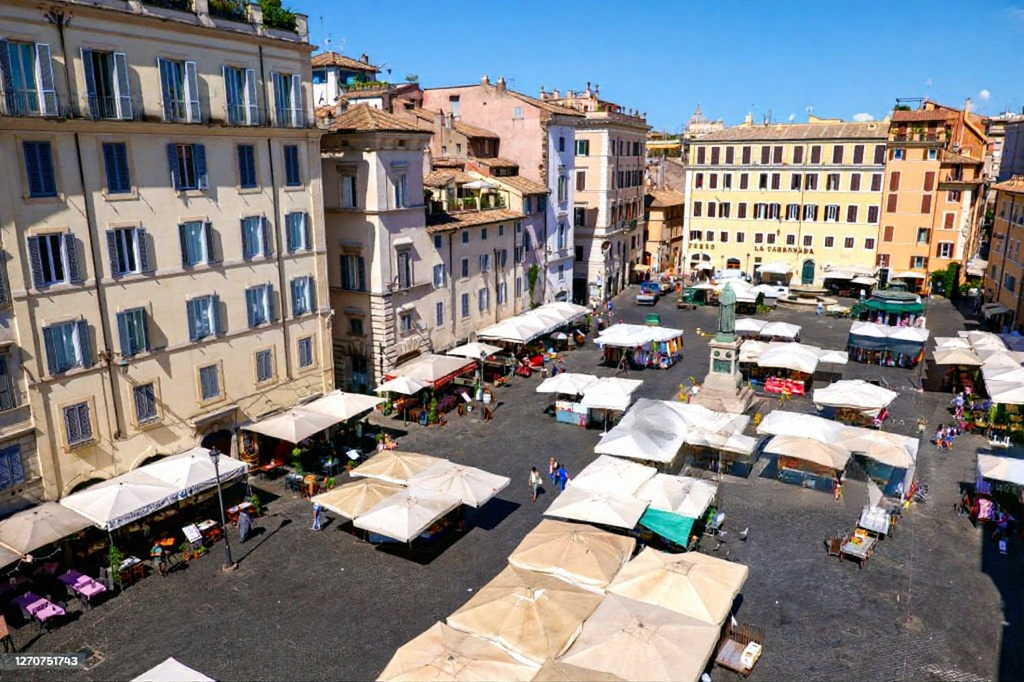
You’ll find Campo de Fiori Rome right in the heart of the historic center, perfectly placed between the Tiber River and Corso Vittorio Emanuele II. Its central location makes it one of the easiest piazzas to include in a walking itinerary, and most visitors stumble upon it naturally while exploring nearby landmarks.
Nearby Attractions to Campo de Fiori Rome
Staying or visiting Campo de’ Fiori, Rome puts you in the perfect position to explore some of the city’s most iconic sites—all within walking distance.
Piazza Navona (5 minutes)
- Just a short stroll north, this Baroque masterpiece is famous for its fountains, street artists, and elegant cafes.
- Ideal for a quick photo stop or a leisurely gelato while soaking in Rome’s artistic charm.
Pantheon (10 minutes)
- One of Rome’s best-preserved ancient buildings, the Pantheon is a must-see for history enthusiasts.
- Pair your visit with a coffee at a nearby café or a stop at the Campo de Fiori market Rome opening hours to enjoy fresh snacks on the way.
Trastevere (15 minutes across the Tiber River)
- This bohemian neighborhood offers narrow cobblestone streets, lively piazzas, and some of Rome’s best trattorias.
- Perfect for a late afternoon stroll before returning to Campo de’ Fiori for the evening scene.
Jewish Ghetto & Largo di Torre Argentina
- Discover the rich history and delicious cuisine of the Roman Jewish community.
- Largo di Torre Argentina is also the site of Julius Caesar’s assassination—a fascinating spot for history buffs.
Because of this central location, many travelers choose to book hotels near Campo de Fiori Rome or even stay in a Campo de Fiori apartment, Rome, for easy access to both daytime sights and nightlife.
How to Get to Campo de Fiori Rome?
Getting to Campo de’ Fiori Rome is remarkably easy, whether you’re coming from nearby landmarks or traveling across the city. Since it sits in the historic heart of Rome, most travelers find walking the most convenient and enjoyable way.
Walking Directions:
- From the Pantheon, it’s less than a 10-minute walk. Follow Via dei Pastini or Via del Salvatore to the square, and you’ll arrive amidst the market stalls and lively chatter.
- From Piazza Venezia, it’s roughly a 15-minute stroll, perfect if you want to pass through charming streets lined with shops, cafes, and historical sites.
Public Transport Options:
- Bus: Lines 40, 64, 70, and 81 pass near Campo de’ Fiori. The stops along Corso Vittorio Emanuele II are just a short walk from the piazza.
- Tram: Tram line 8 stops at Arenula/Cairoli, a convenient option if you’re coming from Trastevere or the southern districts.
Tips for Navigating:
- Wear comfortable shoes—the cobblestones can be uneven.
- Stick to side streets for a more scenic, less crowded walk.
- Walking allows you to stumble upon hidden gems like small churches, artisan shops, and, of course, Forno Campo de Fiori in Rome for an early morning pastry.
Accessibility Info:
Most areas in and around the square are flat and accessible, but some of the historic buildings and restaurants may have steps. Many hotels and cafes provide ramps or lifts, so it’s worth checking ahead if mobility is a concern.
Top Things to Do and See in Campo de Fiori Rome
Campo de’ Fiori is much more than a piazza—it’s an experience. From morning to night, there’s no shortage of things to do.
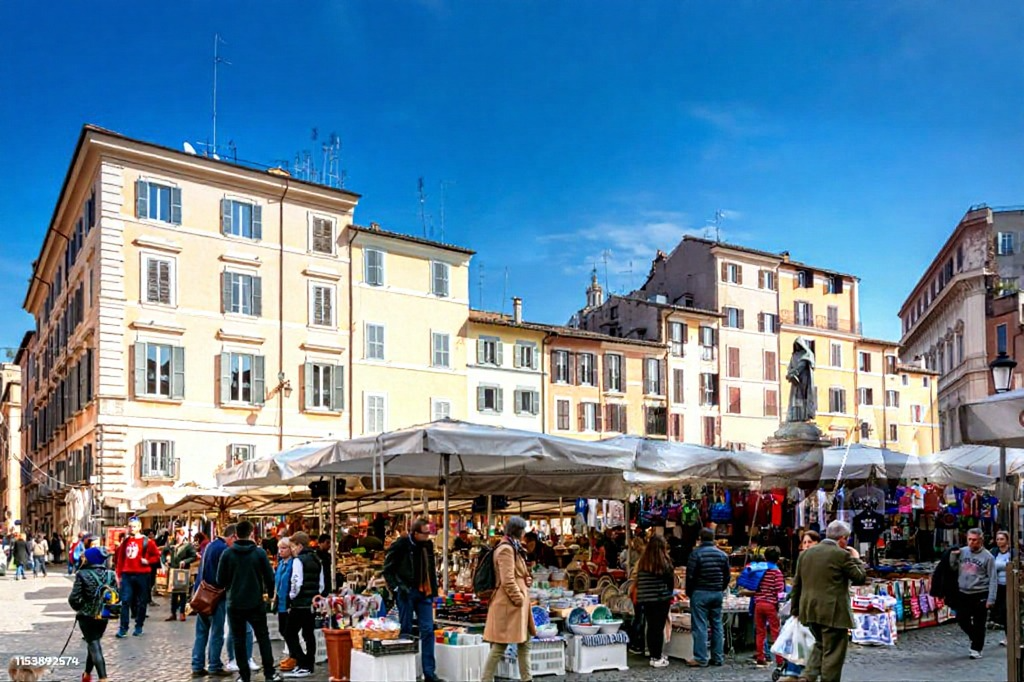
Best Times to Visit Campo de’ Fiori Market
| Time | Experience |
| 🌅 7–9 am | Freshest produce, locals shopping |
| ☀️ 10–12 pm | Lively, good photo ops, tourist crowds start |
| 🍝 12–2 pm | Many stalls start closing, some food vendors linger |
| 🌙 Evening | No market, square transforms into nightlife zone |
1. Explore the Morning Market
- Open Monday through Saturday, the Campo de’ Fiori market Rome hours are roughly 7:00 am to 2:00 pm.
- Discover fresh fruits, vegetables, herbs, and local products. Don’t miss the sun-drenched oranges, truffle products, and handmade pasta.
- Even if you’re not buying, strolling through the market is a feast for the senses.
2. Visit the Giordano Bruno Statue
- This bronze statue commemorates the philosopher executed here in 1600.
- It’s more than a monument—it’s a symbol of free thought and a reminder of Rome’s layered history.
3. Café & Trattoria Hopping
- Grab a cappuccino at a side street cafe and indulge in some people-watching.
- Local favorites include classic Roman trattorias with pasta dishes like Cacio e Pepe or Carbonara.
While the market and the Bruno statue are must-sees, don’t overlook some unusual things to do in Rome, like exploring hidden courtyards, underground basilicas, or quirky street art just beyond the square.
Food & Dining Around Campo de’ Fiori Rome Italy
One of the best reasons to visit Campo de Fiori Rome is the food—from quick bites at street vendors to sit-down dinners in historic trattorias.
- Street Food Highlight
- Pizza al taglio: Grab a slice from Il Forno Campo de’ Fiori Rome, a local favorite known for its thin, perfectly baked crust and fresh toppings.
- Supplì: These fried rice balls stuffed with mozzarella are classic Roman street food and perfect for tasting on the go.
- Pastries & Espresso: Mornings call for a warm pastry and an espresso to kickstart your day in the piazza.
- Best Trattorias, Pizzerias & Wine Bars
- Da Pancrazio: A hidden gem where you can enjoy traditional Roman dishes in a unique historic setting.
- Enoteca Il Goccetto: Perfect for wine lovers wanting a curated selection of Italian wines paired with small bites.
- Trattoria Orto di Napoli: Known for its cozy atmosphere and authentic Roman cuisine.
Campo de’ Fiori Market Experience
The Campo de Fiori market hours are key to planning your visit. This isn’t just any market; it’s a centuries-old tradition that continues to draw both locals and curious travelers.
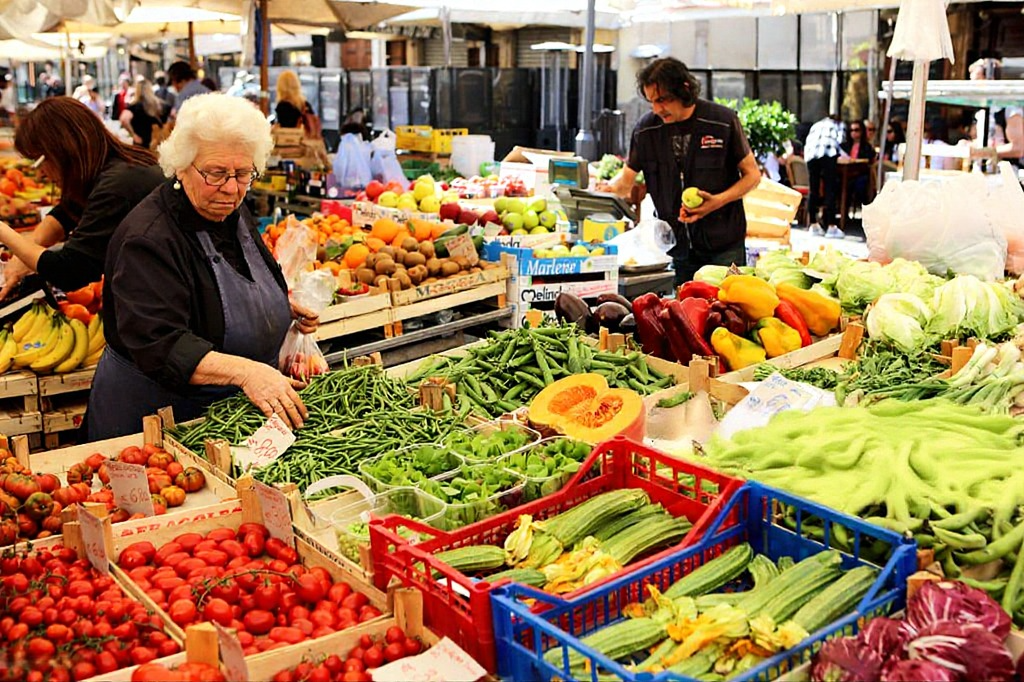
What do they sell at Campo de Fiori?
- Fresh Produce: Mountains of oranges, crates of figs, seasonal vegetables, fragrant herbs, and bright flowers that color the square.
- Specialty Foods: Truffle oils, artisan olive oils, pecorino romano, handmade pasta, and bottles of golden limoncello line the stalls.
- Souvenirs & Gifts: Beyond food, you’ll spot Italian ceramics, leather goods, aprons printed with cheeky Roman sayings, and traditional kitchenware.
What is the Best Time to go to Campo de Fiori?
- Morning: It is the sweet spot for the market—but if you’re planning a broader trip, it’s worth considering the best time to visit Italy, since seasonal changes can shape both your Rome experience and travel budget.
- Late Morning to Early Afternoon: By noon, it gets busier with tourists, but the energy is part of the charm. You can snack on market finds, then retreat to a nearby café to watch the square slowly shift gears as stalls begin to close.
- Afternoon: The market winds down, but it’s a great time to grab a coffee or glass of wine, soak up the quieter vibe, and maybe score a last-minute deal on produce or souvenirs.
Visiting the Campo de’ Fiori market is more than a shopping trip—it’s an immersion into the sensory heartbeat of Rome. The sights, smells, and sounds here capture the city’s character better than any guidebook could.
Mini Itinerary
1 Hour Around Campo de’ Fiori
- Start at Giordano Bruno statue
- Walk to Piazza Navona (7 min)
- Visit Pantheon (12 min)
- Stop for gelato at Gelateria del Teatro
Nightlife at Campo de Fiori Rome
After dark, the square comes alive with laughter, live music, and cocktails. If you’re curious to explore beyond the piazza, you’ll love discovering Rome at night, where landmarks like the Colosseum and Trevi Fountain glow under magical evening lights.
Transformation After Sunset:
- The piazza fills with people, laughter, and music.
- Outdoor seating in bars and restaurants spills onto the cobblestones, creating a lively atmosphere perfect for socializing.
Best Bars & Cocktail Lounges:
- Bar della Pace: Known for its creative cocktails and welcoming vibe.
- Freni e Frizioni: A student favorite just a short walk away, offering affordable drinks and a fun crowd.
- Cul de Sac: Ideal for wine lovers who want to explore Italian varietals in a cozy setting.
Safety Tips for Nightlife:
- If you are asking me, “Is Campo de’ Fiori safe at night?” my answer is yes. Campo de’ Fiori is generally safe, but always keep an eye on personal belongings, especially in crowded areas.
Quick Overview
- Casual drinks outdoors – Piazza bars, social, noisy
- Trendy cocktail bars – More upscale, hidden alleys nearby
- Wine & chill – Local enotecas, quieter, ideal for couples
- Safety tip – Watch bags, avoid late-night taxis from unlicensed drivers
Is Campo de’ Fiori a Good Neighborhood to Stay In?
If you’re considering booking a hotel in Campo de Fiori, Rome, you’re in luck—this neighborhood is ideal for travelers who love being in the center of the action.
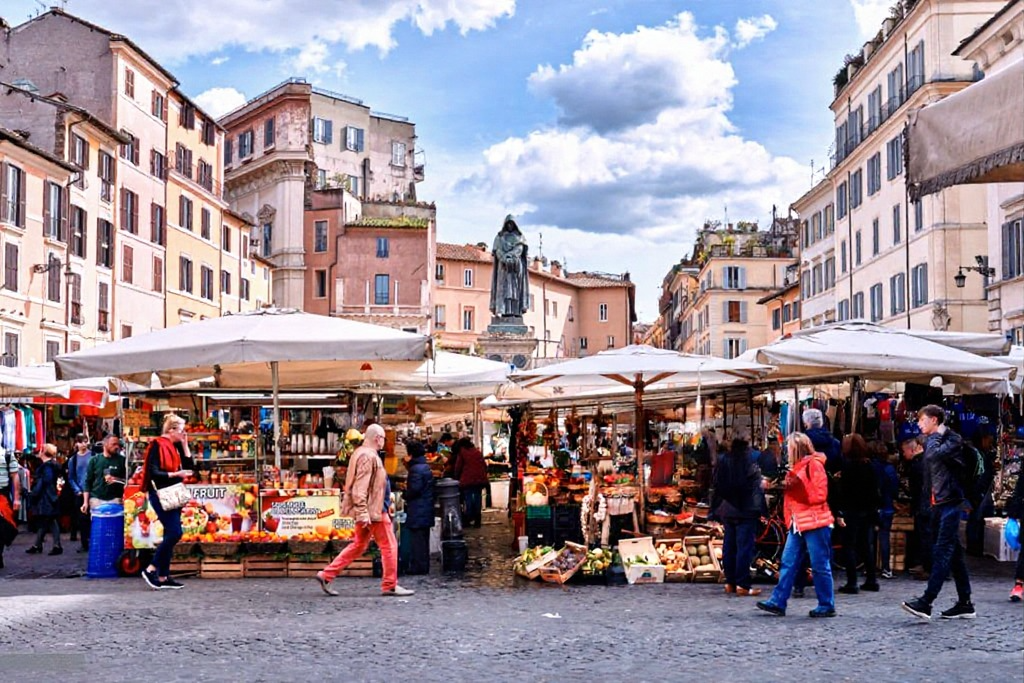
Pros of Staying Here:
- Nightlife and Dining: After sunset, the square fills with bars, trattorias, and wine spots. You can enjoy a full Roman evening without leaving the neighborhood.
- Historic Ambiance: Staying near the Giordano Bruno statue and cobblestone streets feels like stepping back into Rome’s vibrant past.
- Central Location: Walk to the Pantheon, Piazza Navona, or even the Tiber River in minutes.
Cons of Staying Here:
- Noise: The square is lively into the late evening, which can be a challenge for light sleepers.
- Cost: Hotels, boutique stays, and restaurants can be pricier than quieter Roman neighborhoods.
Accommodation Options:
Can you stay near Campo de’ Fiori?
Absolutely! There are plenty of options, such as:
- Boutique Hotels: Options like Boutique Hotel Campo de’ Fiori, Rome Italy offer stylish rooms and excellent service.
- B&Bs and Apartments: Perfect for travelers seeking a more intimate, local experience. Check for Campo de’ Fiori apartments in Rome for unique stays.
- Airbnb: Many charming apartments are available, giving you a chance to live like a local in the heart of Rome.
Staying here is worth it if you want to immerse yourself fully in Roman life, but if you prefer quiet nights, consider a side street away from the main square.
Conclusion
Visiting Campo de Fiori Rome is like stepping into a living, breathing postcard of the Eternal City. From its vibrant morning market brimming with fresh produce and flowers to the energetic nightlife that fills the square after sunset, it’s a place that offers something for every traveler.
In short, Campo de’ Fiori Rome is unmissable—a place where history, culture, cuisine, and nightlife converge.
Add it to your Rome itinerary, and let yourself get lost in the energy, colors, and flavors of one of the city’s most iconic squares.
Frequently Asked Questions
Is Campo de’ Fiori worth visiting?
Absolutely! Campo de’ Fiori is worth visiting for its vibrant morning market, buzzing nightlife, and rich history. It’s one of the few Roman piazzas that feels alive from sunrise to midnight.
Is the Campo de Fiori market open every day?
No, the Campo de’ Fiori market runs Monday through Saturday, usually from 7:00 am to 2:00 pm. On Sundays, the stalls are closed, but cafés and restaurants still welcome visitors.
How do you pronounce Campo de Fiori?
It’s pronounced “KAHM-poh deh fee-OR-ee.” The “de’” is quick and soft, almost like “day.” Saying it correctly makes interactions with locals smoother and adds charm to your visit.
Is Campo de Fiori touristy?
Yes, Campo de’ Fiori is touristy—especially the market—but it still retains authentic Roman character. Locals shop here, students gather, and nightlife draws crowds, blending everyday Roman life with global visitors.
Where to eat around Campo de Fiori?
You’ll find endless options: Forno Campo de’ Fiori for pizza al taglio, traditional trattorias serving Carbonara and Cacio e Pepe, plus cozy wine bars perfect for sipping local vintages.
What is Campo de’ Fiori Rome famous for?
Campo de’ Fiori is renowned for its daily morning market, its vibrant nightlife, and the historical Giordano Bruno statue. It’s a hub for locals and tourists alike, offering food, culture, and entertainment in one lively piazza.
How far is Campo de’ Fiori from the Colosseum?
It’s about 20–25 minutes by foot or a 10–15 minute bus ride, depending on traffic. The central location makes it ideal for walking tours that cover multiple landmarks.